Monday, December 1, 2008

Class Reflection

1) I feel that I have grown as a student in this class. I've never taken a literature course as a college student, and have not had to look closely at literature. I think I gained a better understanding of messages that are trying to be transmitted in literature that may not be seen with the first read through. 
The text Persepolis challenged my view of Iranians. I have stereotyped them as fanatics, and I think getting someone's personal experience was able to open my eyes a little bit. 
I think my writing has improved. I received good suggestions on how to incorporated quotes from texts into my paper. I've always struggled with that. I've also enjoyed the revision process. It's allowed me to look at my writing again, and I normally don't do that.

2) I really enjoyed reading The Bluest Eye, but that's because I've read Toni Morrison before and have liked her work. She has a beautiful way of writing, and there is a lot of depth to her stories. She sympathizes with almost all of her characters, or at least wrote in such a way to make me sympathize with them. I struggled with Shakespeare, but I didn't take as much time with his play as I did with the other literature we have discussed in class. I think I could have enjoyed him more if I had taken more time with his play. I also had a hard time deciphering his play. I really enjoyed the form of his play, but his language is not something I am used to, and I didn't always understand what was going on in the play.

3) My prejudice against graphic novels has been challenged. I've had preconceived notions of the lack of intelligence and maturity in graphic novels, but I have more respect for them now. I even recently ordered the graphic novel Maus online to read it over break. I never would have given it a chance before this class. I still have a harder time with graphic novels interpreting abstract ideas in the art. I've read articles on some of the graphic novels we have read and they interpret ideas about the panels by their spacing and ways the characters are drawn that I never would have seen.

4) I was challenged by the close reading assignment, and I enjoyed writing it. It allowed me to really dig into a book I really liked. Again, I've never really tried to look into a book I've been reading before and decipher deeper meanings in the text. It helped me enjoy the book even more. I don't think I liked discussing the response papers the day we were to turn them in. Some of the ideas people had were interesting, but most of the time we were talking about completely different things that didn't increase my understanding of the texts.

5) I do feel better prepared for thinking critically about literature. I know there is more to literature that I originally thought there was. I think I got out of this class exactly what I was hoping to get. I was exposed to different forms of literature I normally wouldn't have read myself as well as types of books that I already like but haven't read yet. We read classic as well as contemporary literature, and we discussed many ideas that texts discuss that are not always talked about. I don't think I could have asked for more.

Wednesday, November 19, 2008

Graphic MSND

I think to understand Gauman's interpretation of MSND one would have to have read the play first. There's a lot going on in the graphic version...the play itself is being put on for an audience of fantasy creatures. I don't think the graphic interpretation is distracting. I think it enhances the play. It adds new elements to it. I like how they show it would have been performed back in the day of Shakespeare and the sets on the sides of wagons. The panels show the fantasy world coming into Shakespeare's reality is interesting. I also like all the fantasy creatures that are watching the play. They're interesting and not as beautiful as one thinks of the fairy world. I usually think of tiny, thin, pretty females with wings.

Monday, November 17, 2008

Soliloquy MSND

Mid Summer Night's Dream  Act 3 Scene 2

HELENA
Lo, she is one of this confederacy!   - Hermia is one of this alliance of people
Now I perceive they have conjoin'd all three  - Now she understands that all of them are together
To fashion this false sport, in spite of me. - To play a game on her
Injurious Hermia! most ungrateful maid! - Bad Hermia! Bad!
Have you conspired, have you with these contrived - Have you really gone in with them on this charade?
To bait me with this foul derision? - To get me upset with this conspiracy?
Is all the counsel that we two have shared, - After all we have confided in each
The sisters' vows, the hours that we have spent, - The sisterly bond we have and all the time we've been together
When we have chid the hasty-footed time - We were babies together
For parting us,--O, is it all forgot? - Have you forgotten that
All school-days' friendship, childhood innocence? - We were childhood friends
We, Hermia, like two artificial gods, - We are godlike...I really don't know what this is trying to say
Have with our needles created both one flower, - We stitched together!
Both on one sampler, sitting on one cushion, - We cross stitched together AND sat on the same pillow doing it!
Both warbling of one song, both in one key, - We sang the same song together
As if our hands, our sides, voices and minds, - We were BFFs!
Had been incorporate. So we grow together, - We grew up together and were still really close
Like to a double cherry, seeming parted, - Our roots are the same and they remained the same as we grew older
But yet an union in partition; - We were together although we parted
Two lovely berries moulded on one stem; - We are conjoined twins
So, with two seeming bodies, but one heart; - We are soul mates
Two of the first, like coats in heraldry, - We wore the same coat of armor
Due but to one and crowned with one crest. - We were born of the same father to inherit the family crest
And will you rent our ancient love asunder, - You will compromise our old friendship and bond
To join with men in scorning your poor friend? - by joining up with these guys and being mean to me
It is not friendly, 'tis not maidenly: It isn't nice. It's not lady like.
Our sex, as well as I, may chide you for it, - Other women would think so too and tell you about it.
Though I alone do feel the injury. - but I'll suffer alone.

Helena thinks that Hermia, Lysander, and Demetrius are playing a prank on her. She thinks this because all of the sudden Lysander and Demetrius are proclaiming their love for her and doting on her when they have never given her that attention before. I think it's funny, because she automatically thinks it is a cruel joke when two men give her affection. In addition to that, she thinks that Hermia would betray her after their life long friendship. That's ironic, because Helena betrayed Hermia to Demetrius to get his affection.

Sunday, November 16, 2008

Midsummer Night's Dream

So I'm not sure of what all went on in this play. It took me reading almost the entirety of the play to realize Bottom's head had been turned into a donkey's head. I thought Helena and Hermia's exchange was most interesting. Helene thought they were all playing a trick on her and that Hermia was playing along, so she starts insulting Hermia and putting her down after she had been envious of her eyes in the beginning of the play. The only character that seemed to stay true to their original convictions was Hermia. Everyone else changed preferences on who they loved and admired. Anyway, I highlighted the part that shows Hermia and Helena's argument after Helena discovers that both Lysander and Demetrius are in love with her.


Wednesday, October 29, 2008

Persepolis Part 1

On page 101 the panels show Marjane's cousin visiting. He is on leave from the military. He had joined right when he joined the service. The last two panels on the page show poor kids from the country who are told the afterlife is better than Disneyland. The cousin, Shahab, says the kids are hypnotized and sent to die in battle. There is disgust in the way he discusses this. The last two panels are interesting because they have black backgrounds with the outline of people being drawn in white. At this point we know Marjane's family is very intellectual. Her cousin may not share the same ideas exactly, but he is able to think rationally unlike the fanatics who have taken over. It is one more example to illustrate the government's abuse of its people. This conflict has forged an identity of rebelliousness for Marjane. Her parents raised her to question authority, especially that of her government. The war further solidifies her opposition to the government. The poems we discussed Monday share this same sentiment. "Memorial Day for the War Dead" talks about the flag losing touch with reality. At this time, Iran lost touch with reality, or its people. Once someone comes to the realization that their government does not have the people's best interest in mind then it is hard to respect them.

Monday, October 20, 2008

Intersections

In Blankets, there is a panel on page 393 that shows an apple tree and topless Raina below it. It discusses the idea of temptation and compares Raina to Eve. I like this panel, because it brings up the point of women being viewed as the original temptresses in Genesis. They will lead you to sin by making you bite into the forbidden fruit. I also like how Craig's conflicted feelings are summed up in this panel. She is beautiful and attracted to him, but he still can't view it as innocent it has to be sin.
Also, on page 540 we see the picture that Craig drew on Raina's wall being painted over. It's like he is erasing her image or memory because he has finally gotten over her.

I think all of the texts we have read so far discuss feeling lost or being afraid of being an outcast. In American Born Chinese the main character denies his ethnicity to try and fit in. He doesn't want to be on the edge of the crowd he wants to feel included. This is also the case with the main character of The Bluest Eye; Claudia. She gets angry with Shirley Temple, because she feels that the image of Shirley discludes her from society. She feels on the outer fringes of beauty because Shirley is seen as the typical beautiful girl. Claudia does not disown her marginalized skin color, but her friend Pecola is convinced that beauty lies in Shirley's blue eyes. Pecola eventually becomes dillusional, and believes she has blue eyes due to circumstances she has been through. Oranges shows us Jeannette who struggles with fitting into her small world of relgion. She battles with her inner feelings and is afraid to be different than her congregation so superficially repents. Blankets shows a boy who is already outcast by his class mates. However, he is afraid of enternal torment, because he is already living it. This results in him trying to conform to the church's teachings and cast aside his passion for drawing and a girl. All of these books have main characters that feel outcast and are trying desparately to feel a part of something...whether it is the white majority or the religious teachings they've been raised in.

Wednesday, October 15, 2008

Blankets

Panel 1: page 51. The whole page is taken up by a panel with a smaller panel in it. It shows the main character with his hands clasped looking up saying "At that moment I knew what I wanted..." and then the larger panel shows him dancing in the clouds naked saying "I wanted heaven." I like this panel because the smaller panel is consumed by the bigger picture: heaven. Also the clouds from heaven go into the smaller panel. It's dreamlike. He is picturing himself in heaven. I think a really interesting part in there is that he is naked. He is bullied because of his skinny body, and there is hinting at that he may have been molested in the previous pages. This can result in shame about his body, but in heaven he may see himself free of his body.
Panel 1: page 59. The bottom panel shows three images of Craig. At the top of them is "I wanted to burn my memories." What's interesting about this is that his torso is drawn out, but his face is blurred slightly in the first image, more blurred in the second, and then the third image has no recognizable features of his face and then there is a split at the top of his head with what looks like flames coming out of it. There is torment in this. Obviously someone is tormented if they say they want to burn their memories, but the pictures shows an imagined effort to follow through.
Panel 3: page 127. I like the way this panel illustrates the effort of the furnace to kick on and when it finally does the hum in the picture surrounds the room. I think it is a beautiful way to illustrate the noise and the heat of the furnace enveloping the rec room.

The first part of the book talks about being young and wrapped up into religion and what it can positively do. Craig, the main character in "Blankets" is comforted by the fact that heaven could be a place where he doesn't experience pain. In "Oranges" the young Jeannette found comfort in her religion as well. However, when both characters get older their sexuality conflicts with the messages of the church. "Blankets" goes further into their problems with the bible, but they both address what the church doesn't do for them. Dickinson's poem "Some Keep the Sabbath" discusses the same idea of a building for a church is not what works for her. This is the eventual realization that both characters of "Blankets" and "Oranges" comes to.

Monday, October 13, 2008

Are Oranges The Only Fruit?

My beliefs are rooted in the rebellion of the religion I was raised in. I was raised in a fanatical Christian sect, like Jeannette. I had unanswered questions and doubts about the religion at an early age. There was a time when I was completely devoted, but I started to question my place in the organization (especially my role as a woman). Eventually, I was excommunicated from the religion. Unlike Jeannette, I stopped believing in god. I felt betrayed. I think she had a relatively positive attitude toward god considering what she had just been through. I remained an atheist until something else extraordinary happened in my life. This resulted in the reexamination of my spiritual beliefs. Today those beliefs could technically still be considered atheist. I don't believe in a personified spiritual entity. I do believe that everything in this world is connected, and that when I stop taking that approach I become isolated. When I feel isolated my ego becomes huge, and I start to have problems. The majority of my beliefs revolve around trying to deflate my ego, and trying to be a part of instead of apart from.

Monday, September 29, 2008

The Bluest Eye - Fall and Winter

I did notice the book started with this sort of elementary story about "See Mother." When I was reading that part I thought of the picture books with this type of story. It is typically a white family with a little girl or boy all in their specific gender roles. To me, those type of picture books show a "sugar coated" family. These are the problems they deal...no one wants to play with Jane. Poor Jane. I think she takes out punctuation and eventually spaces from that story to show either how it blends together or how meaningless it is. She probably repeats sections of the story at the beginning of chapters to show the contrast of this white middle class fictional family to the families shown in the book who are poor and black.

Working Thesis

I'm doing my close reading paper on Bluest Eye. I noticed the way Toni Morrison uses color to describe the way people talk. I'm not sure of the passages in the book, but I specifically remember her saying someone talked in green. So my working thesis is:
Toni Morrison's Bluest Eye uses color to convey more meaning out of a character's message.
Does that make sense?

Tuesday, September 23, 2008

Self Reliance in American Born Chinese

The book American Born Chinese and Emerson's "Self-Reliance" both discuss what it means to be yourself.
Two characters in American Born Chinese struggle with self identity. They both want to be something they are not. On page 59 we see the Monkey King transform into a human like figure. He distances himself from his monkey subjects by taking this form. The other character in the book, Jin, has experienced nothing but isolation for his white peers at school because of his ethicity. On page 98 Jin completely changes his hair style to look like who he thinks his crush is attracted to. On page 198 we even see Jin turn into a white boy. Both the Monkey King's story and Jin's story leads them to a state of isolation and loneliness. Jin starts to try and connect to his roots, and the Monkey King has accepted he is a monkey.
Emerson's essay discusses the ideas of trying to be something you're not. He says "imitation is suicide." I agree to a certain extent with that. I believe what he is saying is that trying to be something other than what you are is killing your true nature. Jin's story illustrates this, because he literally leaves behind the Chinese boy and becomes a white boy. However, imitation is a part of human nature. That's how we learned to smile and speak as children.
I get the lesson of the story American Born Chinese and what Emerson is trying to say. They're both telling us to be ourselves. However, I feel that some of us have to go through the struggle of trying to being something else to realize who we are. I can't imagine what it would feel like to be an ethnic minority. However, I do know what it feels like to be a woman and see men around me treated differently and having more power. When I was a kid I wanted to be a boy. I saw women as weak and lacking opportunity, and I didn't want to be that. However, getting older and learning new things has helped me to embrace my own definition of feminity. I didn't want to be who I was, because that meant I lacked power. Emerson can easily say, basically, be yourself, because he was a white male. He had power in this society. I think we are who we are, because of who we are around. Either we are in argreement or opposition with someone. We base our ideas and beliefs off of the those we encounter. To be myself, I have to be all of my experiences which contain many people and impressions.

Monday, September 22, 2008

American Born Chinese

I like how the book American Born Chinese uses three different story lines to drive home a point. There is the monkey king myth, an autobiography of the author, and the Chinese cousin who comes to visit. I particularly enjoyed the parts of the story dedicated to the Chinese cousin. It played off of stereotypes depicting Chinese in the media. On page 51, we have just been introduced to the character Chin-Kee. He has come to visit his cousin Danny and interrupted a study session in which Danny is trying to ask his study partner on a date. Danny shows panic in the first panel with raised eyebrows, widened eyes, and a gaping mouth. The next panel shows Chin-Kee drooling over Danny's study partner. There is a large amount of drool dripping from his mouth. He also has two large buck teeth coming from his upper lip. I find that part interesting, because the other two caucasian characters just have solid white mouths. There is no distinction between their teeth at all. Chin-Kee speaks, and the words show his stereotypical speech, "Dis pletty Amellican girl wiff bountiful Amellican bosom must berong to cousin Da-nee!" This panel also has Chin-Kee's persistent laugh displayed at the bottom. "HA HA HA HA HA." I think this is to show Chin-Kee's playful and embarassing presence. In this same panel you see the girl looking confusedly, maybe frustratingly, at Danny. Then, the next panel Chin-Kee says he is coming to school with Danny. His eyes are not open in either panels. The next panel shows Danny's panic. A curved line to show his head swiveling and the word "MA!?" in a bubble. The font is bold. This shows the urgency of his question. This page alone shows the immediate dislike of the character Chin-Kee. That is continued in the rest of the story about Danny and his cousin.
While reading this section I kept thinking of the movie "Sixteen Candles." The plot is similar to that movie. A caucasian has an embarassing Asian relative come visit. They then take them to school with them and are embarassed by their overpowered sex drive, their mannerisms, and accent. The characiture of a Chinese person here is ridiculous, but I saw it in Sixteen Candles (minus the "traditional" Chinese clothing). There's the classic line in the movie, where the Chinese boy character, Long Duck Dong, is looking for his new girlfriend, "Ohhhhh, sexy girlfriend!" It is amusing, but at the expense of Asian Americans everywhere. This is the picture our media has painted of a young Chinese boy who has come to America.

Wednesday, September 17, 2008

bell hooks

bell hooks uses popular culture references to illustrate her ideas of representation. I always find the depictions of sexual violence disconcerting. They make me angry and uncomfortable especially when someone is commenting on how they represent the ideas of the people who created these images. I believe the creators of movies and television shows are playing out some sort of fantasy. Real life doesn't happen the way it is shown on TV, but real ideas are represented on television.
The term "white supremacist capitalist patriarchy" describes society. We live in a world where people with lighter skin and males have more privileges. Capitalism drives this force. I like how bell hooks points out that we all participate in it. I feel that she is saying we aren't victims of it. The "rules" of society are agreed upon by everyone within it.

Monday, September 15, 2008

American Gothic

Based on some of the ideas that Molly Bang talks about interpreting images I think there is much to be interpreted about the painting American Gothic. Like all works of art, American Gothic can be interpreted in many ways. One point Bang discusses is the top part of an image and how that can express spirituality. The house in the background of the picture, to me, looks like a church. The steeple is placed almost exactly in the middle of the two heads, which could represent their ideas. The window reminds me of a church window and it is point upward towards the sky.
The colors of the painting are also subdued. They are not bright, bold, or overbearing. There is a simplicity to the colors which may reflect the simplicity and subdued nature of the people.
The two people in the picture also look like their married. I say this, because of the predominant ideas of gender roles in marriage during this period of time. These ideas have changed somewhat today, but were much more rigid then. The woman looks submissive. She is not looking directly out of the picture. Her gaze is averted; maybe to her husband. She is also standing behind him suggesting that she looks to him for leadership. The man is taking up much of the picture. He is staring directly out of the picture with little regard for the woman behind him suggesting confidence, dominance, and leadership. He is also holding a pitchfork. This could suggest that he does the hard labor, so he carries the tool. However, a pitchfork could also be a weapon. The couple could represent simple, god-fearing country folk who are hard workers, but are also very protective of what they've got. They will fight to keep it.

Wednesday, September 10, 2008

Real books

I really don't know what real books are. The books I know about are ones that have several pages bound together with writing and/or pictures inside. They tell a story, or inform you about some kind of subject. I don't know of any books that I wouldn't consider real. Well, maybe that book J.K. Rowling hand wrote only a few copies of that is supposedly another Harry Potter story but is too selfish to let the world in on.

I've never really been interested in visual texts, because they have always seemed childish and nerdy to me. I've always thought of little boys with sticky fingers as the main demographic of comic book readers. I've never entertained the idea that they had any sort of adult material or interest in them. However, I do like the movie Sin City and I know that was a graphic novel. I've also always thought visual texts were for people without enough imagination to read a novel without pictures. However, I am willing to have my mind changed.

Monday, September 8, 2008

What is an American?

I think an American is anyone who identifies themselves as an American. Our culture is too diverse to say it is any one thing. There are many shades, beliefs, ideas, affiliations, and so on. Our culture is distinct, but not everyone participates in it. For instance, you could call us a fast food culture. A lot of Americans eat fast food, but not every one does. So does an American have to eat fast food? No. Also, you don't have to love everything about this country. I, for one, am not always a fan of fast food or the way our government is ran. Does that make me less American? No.

I think the typical picture of an American is painted as middle class and white. That's what you mainly see in the media and Norman Rockwell paintings, but that's not what it is. It's not one demographic.

I don't think you have to be born in America to be American. A lot of people come here from other places and bring their culture with them, and then blend it in with American culture. That's what makes America, America. There are European, Asian, Latin, and African traditions all mixed up in this country.

Furthermore, I think many Americans are a little ethnocentric. Why else would we refer to ourselves as Americans when we are one section of two continents with the name America in them? We can get a little blown up about our culture and how great our country is. There is no doubt I am grateful to have many privileges living in this country that others do not enjoy, but does that make us better than anyone else? I don't think it does. That attitudes leads to situations that we are currently involved in this world.

So in conclusion, I think "American" is too broad of a label to say it is any one thing. I think it is relative. If you think you're an American then call yourself an American. If you live within the United States of America then you're probably an American.


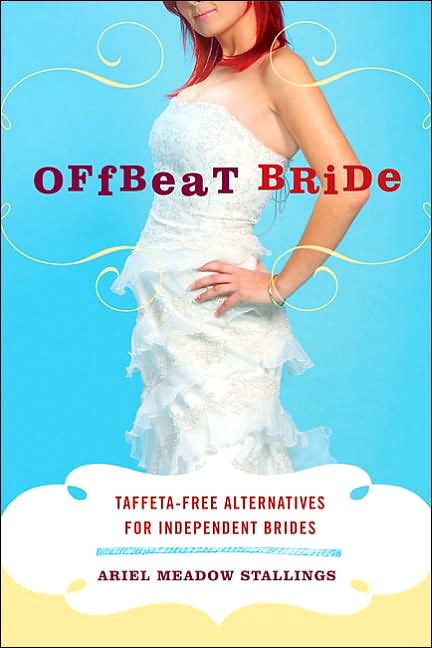
I'm getting married next year, and I haven't found much I can identify with in the wedding genre publications. I finally found this book, and absolutely love it. I got a lot of my ideas and validation from this book.
There are some really cool brides on their website. Offbeat Bride

Sunday, September 7, 2008

Two Theories

I found the Religious Theory interesting to think about. I can read the Bible, Koran, Torah, or Bhagavad Gita as literature. They may have some interesting stories or points of view, but I just view them as stories. Someone wrote them years and years ago, and that's that. However, if you are reading these pieces of literature because you belong to a certain religion that says these are have been influenced by god then they take on a new significance. Reading the book then becomes reading the word of god. The words can then be taken more to heart and shape a large part of one's world view. It becomes more difficult to criticize some of the ideas, because you are not just talking about a book you're talking about someone's religion. It can be a very sensitive subject.

I am always interested in Feminist Theory. It's amazing to see how some texts that many people base a lot of their values from have taught people how to view women. Literature can reflect how women are viewed in certain cultures. Female characters can show stereotypical female characteristics such as submissiveness, indecisiveness, child oriented, and so on. I have read a small percentage of the world's books in my lifetime, but I could point out how women are put in to their socialized box in each of the books I have read.